Advance Auto Parts
- 4.7
- Rating
- 1.00M
- Installs
- Free
- Price

 Analysis by App-foxy
When I first opened Advance Auto Parts + Tools/Acc, I expected a straightforward shopping app, but its usefulness became clearer when I treated it as a companion for actual car maintenance rather than as a place to browse parts. It brings parts for cars, trucks, and SUVs together with DIY tools and repair help, which makes it more practical than a simple catalog when I am trying to understand what I need before buying it.
The app is free, aimed at everyone, and developed by Advance Auto Parts, Inc. That combination makes it easy to recommend as a low-risk starting point for drivers who prefer doing basic work themselves. It is available for Android devices running version 8.0 or later, and the current release is 5.0.4. I would not describe it as a complete replacement for a mechanic, but I do see a lasting role for it in the less glamorous part of car ownership: checking parts, planning maintenance, and avoiding rushed purchases.
What the first week feels like
The strongest first impression is convenience. Instead of switching between a parts store, a search engine, and a separate repair guide, I can begin in one place. That matters when I know the symptom but not the exact component. A car that struggles to start, for example, could involve the battery, terminals, charging system, or something less obvious. A useful parts app should help me narrow the task before I spend money, and this one is built around that kind of shopping journey.
You May Also Like

 Blood Strike: 2.5 Anniversary
Blood Strike’s Loadouts Turn Every Drop Into a Tactical Gamble
A close look at Blood Strike’s custom loadouts: how fast access to signature weapons reshapes its battle royale rhythm, rewards preparation, and narrows the gap between fights.

 Pandora - Music & Podcasts
Pandora’s Music Is Easy to Start, but Harder to Recover
Pandora’s strength is its low-effort path from a seed to a station. Its weak spot is how much confidence it asks you to place in connection, setup, and quiet recovery.

 8 Ball Pool
 Is Built on Rivalries, Rematches, and Routine
A close look at the rivalries, rematches, shared routines, and unanswered safety questions that turn a quick pool match into a persistent mobile community.

 Samsung Music
’s Quiet Strength Is Playing What You Already Own
Its reach comes less from spectacle than from dependable access to a personal library. That simplicity is both the app’s strongest retention engine and its ceiling.

 AccuWeather: Weather Radar
AccuWeather Review: A Quick, Clear Forecast for Everyday Decisions
For everyday plans, the best forecast is the one you can understand quickly. AccuWeather makes rain timing, radar, and local conditions easy to act on, with a few trade-offs.

 Hill Climb Racing
Why Hill Climb Racing Still Turns Crashes Into One More Run
A tiny car, a bumpy hill and one more upgrade: Hill Climb Racing keeps resurfacing because its simple chaos makes every near-miss feel personal.
More From Our News Desk



I found the most value in approaching it with a specific job in mind. “I need something for my car” is too broad and turns the experience into ordinary browsing. “I need to prepare for an oil change,” “I want to replace a worn wiper,” or “I need tools for a small repair” gives the app a clearer purpose. The combination of parts and DIY assistance is more helpful when the app is part of a plan rather than a source of random inspiration.
The catalog focus also gives it an advantage over general online marketplaces. Those sites may show more sellers and more unrelated choices, but that variety can make vehicle compatibility harder to judge. Here, the shopping context stays centered on automotive needs. I still recommend checking the vehicle details, part description, and fit information carefully before ordering, because a familiar-looking component is not automatically the correct one.
That is one of the first lessons I would give a new user: do not rush from a symptom to a purchase. Use the repair help to understand the job, then use the parts area to investigate the likely solution. This two-step habit reduces the chance of buying an attractive but unnecessary item. It also helps reveal whether the task is genuinely suitable for a home garage or better left to a professional.
The app’s popularity suggests that it has found a broad audience. It has passed one million installs, with a 4.7 average from around seventy-one thousand ratings. Those figures do not guarantee that every feature will suit every driver, but they do make the app feel established rather than experimental. I noticed that the real test is not whether it is impressive on the first visit; it is whether I would remember to open it again when the next maintenance task appears.
Useful for planned jobs, not just emergencies
Many drivers only think about vehicle apps when something goes wrong. I think this one has more staying power when used before the warning light or breakdown. I can use it to prepare a small maintenance list, compare the parts needed for a job, and think through the tools before taking anything apart. That preparation is especially valuable for someone who has basic confidence but does not yet have a well-organized workshop.
A realistic example is a weekend brake inspection. I might notice noise during the week, open the app in the evening, read the repair guidance, and identify whether I should be looking at pads, rotors, hardware, or a broader issue. Then I can check the relevant vehicle parts and decide whether I have the tools and time to continue. The app does not remove the need for judgment, but it can turn a vague concern into a more structured decision.
Another useful scenario is preparing for a long drive. Rather than waiting until the morning before leaving, I could review common maintenance needs, inspect the vehicle, and gather replacement items if something looks worn. This is where recurring value begins: the app becomes part of a routine instead of a one-time download after a problem.
How it holds up after the novelty fades
I find its staying power comes less from frequent browsing and more from how easily it can fit into a maintenance routine. I would open it before a repair to clarify the job and gather the right questions, then compare that planned use with the everyday situations where a different kind of help is more useful.
Month-to-month value comes from maintenance habits
After the initial curiosity wears off, the app’s value depends on whether I maintain a simple habit. I would keep it available for three recurring jobs: identifying parts, preparing DIY work, and checking what tools a task may require. Those uses are practical, but they are not equally important every month. Some periods will involve no repair at all, while others may bring several decisions close together.
That uneven rhythm is normal for an automotive app. I do not expect to open it daily, and I would consider that a sign of sensible use rather than a weakness. Cars do not need constant parts shopping. The app earns its space by being ready when maintenance arrives, not by demanding attention between jobs.
For owners of older vehicles, the recurring value can be stronger because small repairs and replacement decisions appear more often. Someone with a newer car that is still covered by a service plan may use the app less. In that case, it can remain a reference for simple items and DIY projects, but it may not become an essential part of the monthly routine.
I also think it works best for people who want to learn enough to make informed choices, even when they ultimately use a repair shop. Looking at parts and repair guidance can help me describe a problem more clearly and ask better questions. That does not mean the app should be used to challenge every professional recommendation. Its better role is preparation: understanding the basic vocabulary and likely scope of a job.
The tools angle adds a useful layer that many parts catalogs overlook. A replacement component is only part of a repair. I may also need a particular hand tool, a way to access a tight area, or equipment that makes the task safer. Checking the tool requirement early can prevent the frustrating situation of starting a repair and discovering that the necessary item is missing.
A practical workflow that saves time
My preferred workflow is to start with the vehicle, define the job, read the relevant help, and only then review products. I would write down the part name and any related items before comparing options. If the repair involves several components, I would review the entire task first rather than adding items one at a time based on search results.
This approach also helps with returns and wasted effort. A wrong part is not merely an inconvenience; it can leave a vehicle unavailable while I wait for a replacement. Confirming fitment and understanding the repair sequence before ordering is therefore more valuable than finding the fastest-looking result.
A less obvious benefit is that the app can help me separate “needed now” from “nice to have.” Automotive shopping easily expands into accessories, upgraded tools, and preventive replacements. I would use the repair guidance as a filter: if an item does not support the job or a sensible maintenance plan, I would leave it out. That keeps the app from becoming an impulse-shopping tool.
Where maintenance becomes a burden
The app itself is not difficult to maintain, but the information around a vehicle can become a burden if I do not keep it organized. I need to know the correct car, truck, or SUV details, remember what has already been replaced, and avoid confusing one repair with another. The app can support those decisions, but it cannot replace a maintenance record or careful inspection.
I would keep notes separately about the work completed, the parts purchased, and anything that still needs attention. That small habit makes future visits more efficient. Without it, I may repeatedly search for the same issue or forget whether a component was actually replaced. The app is more effective when paired with a basic personal record, even if that record is just a note on the phone.
There is also a safety boundary that deserves emphasis. Repair help can make a task easier to understand, but it does not make every task safe for a beginner. Jobs involving lifting a vehicle, braking systems, fuel, electrical faults, or unclear symptoms may require equipment and experience beyond what I have at home. In those cases, I would use the app to prepare questions and identify parts, then rely on a qualified technician for the work.
This is an important trade-off compared with visiting a parts counter in person. A store employee may ask follow-up questions immediately and notice confusion in my description. The app gives me privacy and convenience, but I have to supply the accuracy myself. If I enter the wrong vehicle information or misunderstand the symptom, the digital process can feel smooth while still leading me in the wrong direction.
What can cause fatigue over time
The first source of fatigue is the amount of responsibility placed on the user. The app can bring parts and guidance together, but I still have to decide what the vehicle needs. Newer DIY users may expect a symptom to produce one definitive answer. Vehicle problems rarely work that way. A repair guide can inform the process, but diagnosis often requires inspection, testing, and experience.
The second is the temptation to browse beyond the original task. Automotive catalogs naturally contain many possible upgrades and accessories. That can be useful when I am planning a larger project, but distracting when I only need one replacement item. I find the experience easier when I enter with a written goal and stop once that goal is handled.
The third is that a digital repair workflow cannot provide the physical reassurance of seeing a part in person. A mechanic or store employee may compare the old and new components directly. With the app, I need to rely more heavily on descriptions, vehicle information, and my own inspection. For unusual vehicles or complicated repairs, an in-person conversation may be the better option.
Another limitation is that occasional users may not build enough familiarity to move quickly. If I open the app only during emergencies, I may still spend time learning where to look and what information matters. That is why I prefer using it for low-pressure preparation first, such as planning a routine service or researching a tool before a weekend project.
The app is also not the right choice for someone who wants a complete diagnostic system. Its value is in parts, tools, and repair assistance, not in replacing professional testing equipment or a technician’s judgment. If a vehicle has an intermittent fault, a serious warning, or a problem that affects safe operation, I would not treat a shopping app as the final authority.
How it compares with the usual alternatives
Compared with a general marketplace, Advance Auto Parts + Tools/Acc is more focused. I prefer that focus when I already know I am dealing with vehicle maintenance and want the shopping process to stay relevant. A general marketplace may be better for comparing many brands, sellers, or unusual products, but it can also introduce uncertainty around compatibility and seller quality.
Compared with a search engine, this app offers a more connected path from repair question to automotive product. A search engine is still better when I want broad opinions, independent repair discussions, or information about a rare symptom. The app is more useful when I want to move from a practical maintenance task toward a part or tool without leaving the automotive context.
Compared with a physical parts store, the app wins on planning. I can investigate a job before driving anywhere and think through the tools at home. The store wins when I need immediate human assistance, want to compare a physical component, or have a confusing fitment question. I would not choose one permanently over the other; I would use the app before a visit and the store when the situation needs conversation or inspection.
Compared with a dedicated vehicle maintenance tracker, this app is more useful for finding what may be needed than for managing a complete service history. A tracker can be better for reminders and records. I would pair the two if I wanted a disciplined long-term system: one for remembering maintenance, this one for researching parts, tools, and DIY preparation.
Who should keep it installed
I think it earns a place on the phone of a driver who handles basic maintenance, owns an older vehicle, or wants to become more confident before speaking with a mechanic. It is also a sensible choice for someone who frequently needs parts for a car, truck, or SUV and would rather begin research in a focused automotive environment.
It is less suitable for a driver who never performs or researches repairs and already has a trusted service routine. That person may open it only once or twice, making the space and attention less worthwhile. It is also not ideal for someone expecting automatic diagnosis or step-by-step certainty for every mechanical problem.
For beginners, I recommend starting with low-risk tasks and using the repair help to understand the scope before purchasing anything. For experienced DIY users, the advantage is speed and organization: the app can shorten the path from a known job to the parts and tools worth considering. In both cases, the best results come from checking fitment carefully and resisting the urge to order before the diagnosis is reasonably clear.
My long-term verdict
After the novelty fades, I would keep Advance Auto Parts + Tools/Acc installed, but I would use it deliberately rather than constantly. Its lasting value is not entertainment or daily engagement. It comes from being available at the moment I need to plan maintenance, understand a repair, or find the parts and tools connected to a specific job.
The free price makes that occasional usefulness easy to justify, and the Everyone rating makes it approachable for households where different people may help with vehicle care. Its audience is broad, but its strongest users are practical drivers who want more structure than a general search and more flexibility than immediately visiting a repair shop.
My main caution is to treat its guidance as support, not permission to attempt work beyond my skills. The app can help me ask better questions and prepare more intelligently, yet safety, correct diagnosis, and careful fitment remain my responsibility. That limitation is not unique to this product, but it matters more here because a wrong automotive decision can cost time, money, or safety.
Overall, I see it as a useful maintenance companion rather than a complete garage in an app. It earns lasting space when I use it to build good habits: identify the job, check the vehicle details, understand the tools, separate essentials from extras, and know when to call a professional. For that kind of recurring value, this is one of the more practical automotive apps to keep ready for the next repair.
FAQs for Advance Auto Parts
01What features does the Advance Auto Parts app offer?
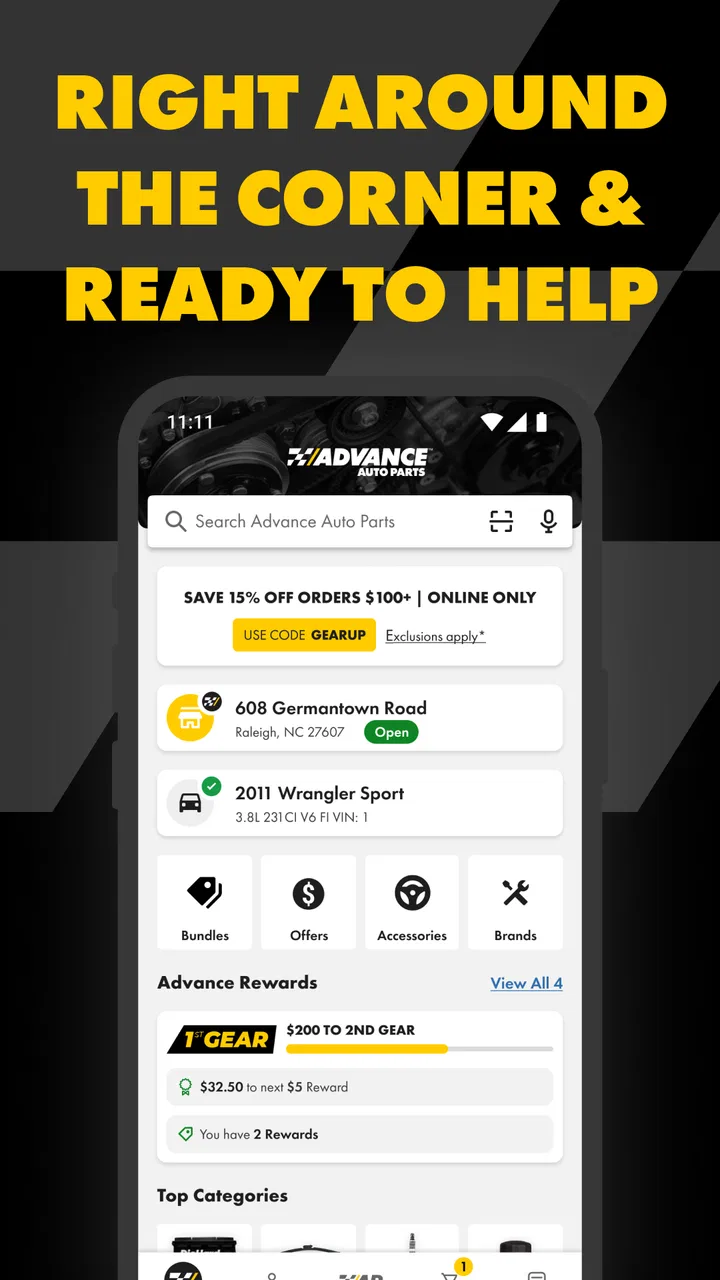
The Advance Auto Parts app provides a comprehensive suite of features, including access to exclusive deals, the ability to order parts for in-store pickup, and a VIN scanner to ensure compatibility. Users can also track their Speed Perks rewards and access DIY repair guides, making it a valuable tool for auto enthusiasts and professionals alike.
02Is the Advance Auto Parts app available for both Android and iOS?
Yes, the Advance Auto Parts app is available for download on both Android and iOS devices. Users can find it on the Google Play Store for Android devices and the Apple App Store for iOS devices. This ensures a wide range of compatibility across different smartphones and tablets.
03Can I use the app to find nearby stores and check inventory?
Absolutely! The app includes a store locator feature that helps users find the nearest Advance Auto Parts location. Additionally, it allows users to check the inventory of specific parts or tools at nearby stores, making it easier to plan purchases and ensure availability before visiting.
04Does the app offer any rewards or loyalty programs?
Yes, the Advance Auto Parts app integrates with the Speed Perks loyalty program. Users can track their rewards, earn points on purchases, and receive notifications about exclusive member-only deals. This makes it easy for frequent shoppers to maximize their savings and benefits through the app.
05Are there any known issues or limitations with the app?
While the Advance Auto Parts app is generally well-received, some users have reported occasional glitches, such as slow loading times or difficulties with the VIN scanner. However, the developers regularly update the app to address these issues and improve overall functionality, ensuring a better user experience.
Pros
- User-friendly interface for easy navigation.
- Comprehensive parts catalog available.
- Real-time inventory check at local stores.
- Convenient order tracking feature.
- Loyalty rewards program for frequent buyers.
Cons
- Occasional app crashes reported by users.
- Limited compatibility with older devices.
- In-app ads can be distracting.
- Some features require account sign-up.
- Delivery times can be inconsistent.

Advance Auto Parts
Gallery